
Enhance Your Space with a Clear Crystal Drop Pendant Lamp
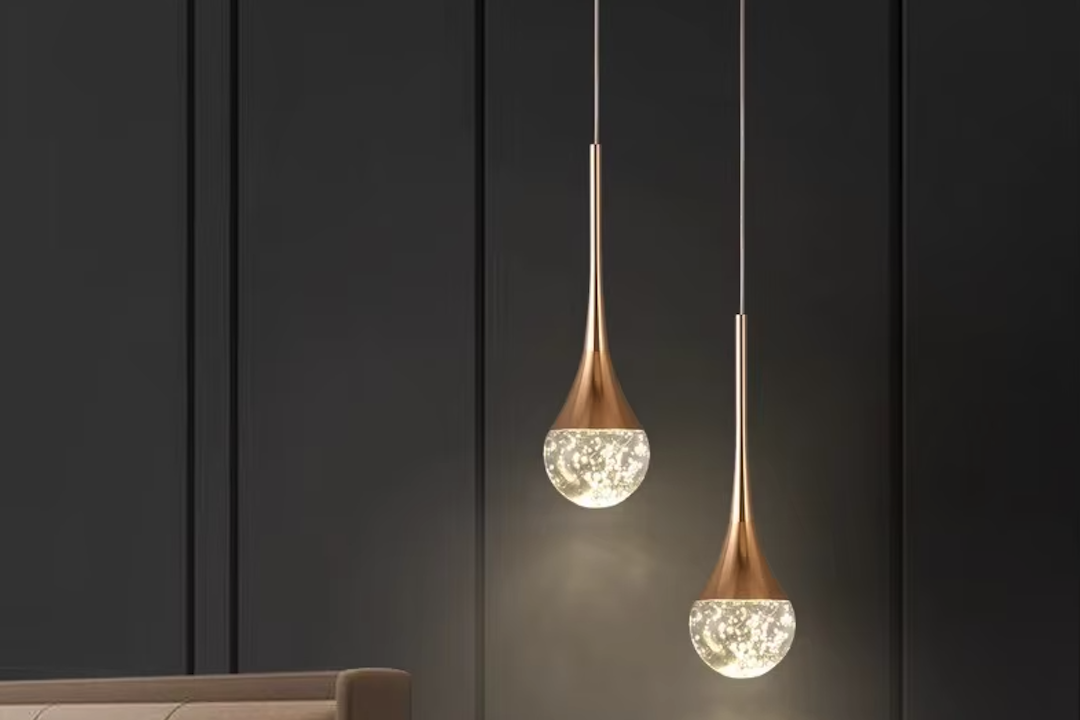
A clear crystal drop pendant lamp is a lighting fixture characterized by a design that incorporates transparent crystal elements, typically shaped as drops or facets, suspended from a central housing. These lamps are designed to refract and reflect light, creating a perceived increase in brightness and visual interest within a space. The aesthetic appeal of such a fixture often lies in its ability to interact with existing light sources and to serve as a decorative focal point.
The design of a clear crystal drop pendant lamp Inzuzu is centered around its crystal components and their arrangement. These components are typically manufactured from lead crystal or lead-free crystal glass, chosen for their optical clarity and refractive properties.
Crystal Material
- Lead Crystal: Traditionally, lead crystal has been favored for its high refractive index due to the inclusion of lead oxide. This material generates a strong dispersion of light, often described as “sparkle.” The lead content can vary, but typically ranges from 24% to 30%.
- Lead-Free Crystal: Due to environmental and health concerns associated with lead, many manufacturers now produce lead-free crystal. These alternatives utilize barium, zinc, or potassium oxides to achieve similar optical properties without the presence of lead. The refractive index may be slightly lower than high-lead crystal, but the visual differences are often subtle to the untrained eye.
- Glass Alternatives: Cheaper alternatives may use standard glass, which possesses a lower refractive index and less dispersion when compared to crystal. The visual effect will be less pronounced, resulting in a more diffused light rather than distinct prismatic refractions.
Drop Shapes and Faceting
The “drop” aspect refers to the shape of the individual crystal elements. Common shapes include:
- Teardrop/Pear: A classic, elongated shape with a rounded bottom, mimicking a falling water drop.
- Round/Ball: Spherical or near-spherical elements, often faceted to maximize light interaction.
- Icicle: Long, slender, and often pointed cylindrical shapes.
- Octagon/Prism: Geometrically cut shapes designed to emulate prisms, maximizing light refraction into spectral colors.
Faceting refers to the angular cuts made on the surface of the crystal. These facets act as tiny mirrors, reflecting and refracting light in multiple directions. The number and precision of facets directly influence the lamp’s light-dispersing capabilities. More facets generally lead to greater “sparkle” and visual complexity.
Suspension and Canopy
The individual crystal drops are typically suspended by thin wires or chains from a central frame or housing. This housing, known as the canopy or fixture body, is affixed to the ceiling.
- Canopy Materials: Common materials for the canopy include polished chrome, brushed nickel, brass, bronze, and sometimes painted metals. These finishes contribute to the overall aesthetic of the lamp and should be considered in relation to other metallic elements in your space.
- Adjustable Height: Many pendant lamps offer adjustable suspension lengths, allowing you to customize the hanging height to suit different ceiling heights or desired visual effects. This adjustability is achieved through various mechanisms, such as adjustable cords, chains with removable links, or ceiling plate tensioners.
Light Source
The light source within a crystal drop pendant lamp is critical.
- Bulb Type: Historically, incandescent bulbs were used. Currently, LED bulbs are prevalent due to their energy efficiency, longevity, and often smaller size, which allows for more compact and intricate designs. Halogen bulbs are also used, providing a bright, white light.
- Color Temperature: The color temperature of the bulb (measured in Kelvin) influences the perceived warmth or coolness of the light. Warmer temperatures (e.g., 2700K-3000K) create a cozier atmosphere, while cooler temperatures (e.g., 4000K-5000K) can yield a more modern or task-oriented feel. The crystal itself does not alter the color temperature, but rather disperses the light that is produced.
- Dimmability: Many modern crystal pendant lamps are compatible with dimmer switches, providing control over the light intensity. This allows for alteration of the atmosphere, from bright ambient light to subtle accent illumination.
Light Dispersion and Visual Impact
The primary function of a clear crystal drop pendant lamp, beyond providing illumination, is its interaction with light. This interaction is central to its visual impact.
Refraction and Reflection
When light enters a crystal, it changes direction due to refraction. The degree of refraction depends on the refractive index of the crystal and the angle at which the light strikes its surface. Facets on the crystal’s surface act as miniature prisms, splitting white light into its constituent spectral colors—much like a rainbow. This phenomenon is known as dispersion. Simultaneously, light also reflects off the polished surfaces of the crystal. This combination of refraction and reflection creates a dynamic interplay of light within the surrounding environment.
“Sparkle” and Prismatic Effects
The term “sparkle” refers to the perceived shimmering and glinting produced by the rapid changes in light intensity and color as light interacts with the multifaceted crystal. As you move around the lamp, or as ambient light conditions change, different facets will catch and disperse light, leading to this dynamic effect. The prismatic effect is the visible separation of white light into spectral colors. These tiny rainbows can be projected onto nearby walls, ceilings, and surfaces, adding an additional layer of visual complexity to the space.
Ambient and Accent Lighting
A single clear crystal drop pendant lamp typically functions as an accent light or a decorative ambient light.
- Accent Lighting: It draws attention to a specific area, such as a dining table, kitchen island, or an entryway. The light it emits, while certainly contributing to the overall illumination, does not usually provide sufficient illumination for an entire room on its own.
- Ambient Lighting: When used in multiples or in conjunction with other light sources, pendant lamps can contribute significantly to a room’s general lighting. Their reflective properties can also make a room feel brighter and more open, particularly in spaces with lighter color palettes.
Perceived Brightness
Due to the reflective and refractive properties of the crystal, these lamps often create a perception of increased brightness. The scattered light can make a room feel more illuminated than it would with a simple diffused light source of the same wattage. This is not an actual increase in lumens, but rather an optical illusion generated by the light distribution.
Placement Considerations
Strategic placement is crucial to maximize the aesthetic and functional benefits of a clear crystal drop pendant lamp.
Kitchen and Dining Areas
- Kitchen Island: A common application is above a kitchen island. Multiple pendants, often referred to as a “pendant cluster” or “linear pendant,” can be arranged to provide task lighting for food preparation and to define the island as a central feature. The height should allow for clear sight lines and avoid head obstruction.
- Dining Table: Placed centrally above a dining table, a crystal pendant lamp can create a focal point, enhancing the dining experience. The light should illuminate the table surface without creating harsh glare or shining directly into the eyes of diners.
Entryways and Hallways
- Entryway: In an entryway, a pendant lamp serves as an immediate statement piece, welcoming visitors. The size should be proportionate to the space, not overwhelming or diminutive.
- Hallway: For longer hallways, a series of smaller pendants might be used to introduce rhythm and visual interest, guiding the eye along the corridor.
Bedrooms and Living Rooms
- Bedside Lamps: Smaller crystal pendants can replace traditional table lamps on bedside tables, freeing up surface space and offering a modern aesthetic. They provide focused light for reading without cluttering the nightstand.
- Living Room Accents: In a living room, a crystal pendant might be used in a corner, above a small seating area, or even in multiples to add sparkle and define zones within a larger open-plan space. It typically functions as a decorative element rather than the sole light source.
Ceiling Height and Clearance
- Standard Ceiling Height (8-9 feet): For standard ceiling heights, ensure sufficient clearance underneath the lamp. Generally, the lowest point of a pendant lamp above a common walking path should be at least 7 feet from the floor. Over a dining table or island, this can be lower, around 30-36 inches from the tabletop, to provide adequate illumination without obstructing views.
- High Ceilings: In rooms with high ceilings, longer suspension rods or chains are often necessary. The lamp needs to be lowered sufficiently so its light distribution and decorative details are noticeable, rather than being lost near the ceiling.
Installation and Maintenance
Proper installation and routine maintenance are essential for the longevity and aesthetic performance of a clear crystal drop pendant lamp.
Electrical Considerations
- Professional Installation: Unless you have experience with electrical wiring, professional installation is recommended. This ensures compliance with local electrical codes and prevents potential hazards.
- Junction Box: The lamp must be securely mounted to an existing electrical junction box in the ceiling. The junction box must be rated to support the weight of the fixture.
- Wiring: Correct wiring to the house’s electrical supply is critical. This typically involves connecting the lamp’s hot, neutral, and ground wires to their corresponding wires from the junction box.
Assembly
- Crystal Attachment: Many crystal pendant lamps are shipped with the crystal drops separate from the main fixture body to prevent damage during transit. The assembly process often involves individually attaching each crystal drop to the frame, which can be time-consuming due to the number of components. Follow manufacturer instructions carefully to ensure correct placement and order of crystals.
- Gloves Recommended: Handling crystals with clean gloves can prevent fingerprints and smudges, which can detract from their appearance.
Cleaning and Care
- Dusting: Regular dusting with a soft, lint-free cloth or a feather duster will prevent dust buildup, which can dull the crystal’s sparkle.
- Deep Cleaning: For a more thorough cleaning, disconnect power to the lamp. You may need to carefully remove individual crystal drops. Wash them in a solution of mild soap and warm water, or a specialized crystal cleaner. Rinse thoroughly and dry immediately with a lint-free cloth to prevent water spots. Reattach only when completely dry.
- Avoid Harsh Chemicals: Do not use abrasive cleaners, ammonia-based products, or acidic solutions, as these can damage the crystal or the metal finish of the fixture.
- Bulb Replacement: When replacing bulbs, ensure the power is off and the bulbs have cooled. Use the correct bulb type and wattage as specified by the manufacturer.
Style and Integration
A clear crystal drop pendant lamp is a versatile fixture that can be integrated into various interior design styles, provided thoughtful consideration is given to its specific design and the surrounding environment.
Modern and Contemporary Interiors
In modern and contemporary settings, crystal pendants can introduce a touch of visual texture and reflectivity. Look for designs with clean lines, minimal ornamentation beyond the crystals themselves, and metallic finishes like polished chrome or brushed nickel. The focus here is on understated elegance and the interplay of light. A cluster of simple, elongated crystal drops can offer a sophisticated and sculptural element.
Transitional Styles
Transitional design, which blends traditional and contemporary elements, is often a good match for moderately ornate crystal pendants. These might feature slightly more elaborate canopies or a mix of crystal shapes, but still maintain a sense of balance and avoid excessive embellishment. The intention is to create a harmonious blend of classic elegance and modern simplicity.
Glam and Art Deco Influence
For interiors aiming for a “glam” aesthetic or an Art Deco influence, crystal drop pendants are particularly suitable. These styles embrace opulence, reflective surfaces, and geometric patterns. Look for lamps with heavy faceting, multiple tiers of crystals, or designs that incorporate strong geometric forms. Gold or brass finishes often complement these styles, enhancing the luxurious feel.
Minimalist Approaches
While seemingly counter-intuitive, some minimalist designs can incorporate crystal pendants. This usually involves a single, exceptionally well-crafted crystal drop with very precise faceting, acting as a singular, impactful focal point. The surrounding environment remains sparse, allowing the crystal’s interaction with light to be the primary decorative element. The size and complexity of the lamp must be carefully chosen to avoid overwhelming the minimalist aesthetic.
Complementary Elements
When selecting a crystal pendant, consider how it will interact with other elements in your space:
- Furniture: Does the style of the lamp align with your existing furniture? A very ornate crystal pendant might clash with raw, industrial furniture, for instance.
- Metallics: Match the finish of the lamp’s canopy (e.g., chrome, brass, bronze) with other metallic fixtures in the room, such as door handles, cabinet pulls, or other light fixtures, for a cohesive look.
- Color Palette: The clear crystals themselves are neutral, but the reflections they cast will pick up and refract colors from the surrounding environment. A vibrant room will see those colors dispersed, while a monochromatic room will feel more subtly illuminated.
- Scale and Proportion: The size of the lamp should be proportionate to the room and the area it illuminates. A small pendant in a large room may appear insignificant, while an oversized one in a compact space can feel overwhelming.
Ultimately, a clear crystal drop pendant lamp is more than just a light source; it is a decorative element designed to enhance the visual ambiance of a space through its unique interaction with light. Its selection and placement require consideration of its materials, design, and your existing interior aesthetic to achieve its full potential.

You May Also Like
Enhance Your Bedroom with Eclipse Marble Wall Sconce
October 25, 2025
Discover the Popular Nordic Style Floor Lamp
February 8, 2025
Enhance Your Bedroom with an Enameled Brass Perforated Floor Lamp
December 19, 2025
Enhance Your Bedroom with a Stylish Wall Lamp
June 18, 2024
Creating a Calm Nursery: Soothing Night Light Tips
February 10, 2026
Illuminate Your Space with a Bedroom Bow Bell Wall Lamp
September 16, 2025
Editors' Choice

Must-Have Lighting Accessories for Your Home
June 11, 2024

Organize Your Child’s Toys with These Fun and Functional Toy Boxes
October 21, 2022
Kitchen and Dining Room Design Tips
March 23, 2023
+ There are no comments
Add yours