
Upgrade Your Walk-In Pantry with a Stylish Ceiling Lamp
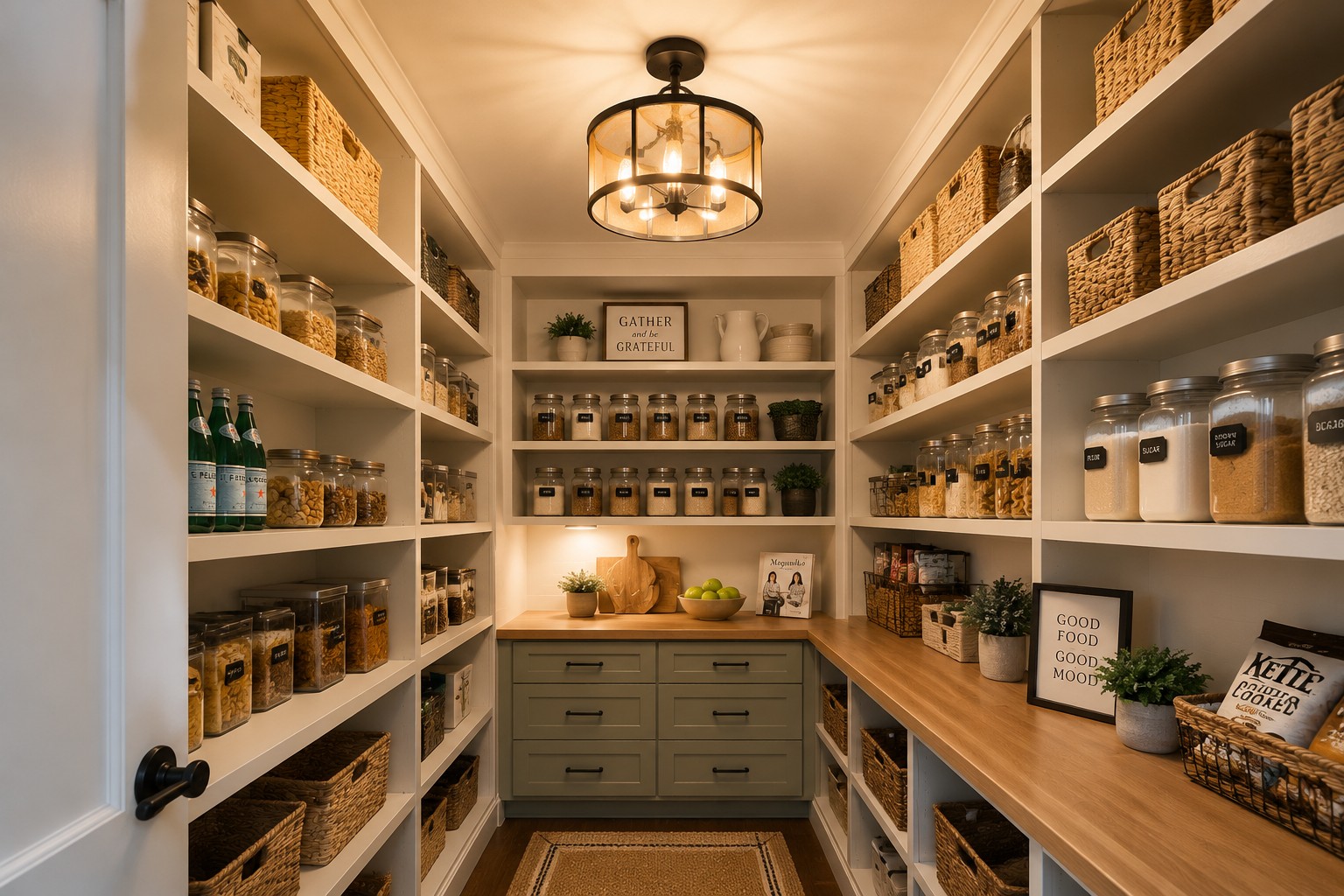
So, you want to upgrade your walk-in pantry with a stylish ceiling lamp? Good idea! The main reason to do this is simply better illumination. Many pantries, even walk-ins, suffer from inadequate lighting, leaving dark corners and making it a challenge to find what you need. A well-chosen ceiling lamp doesn’t just look good, it significantly improves functionality, making your pantry a more pleasant and efficient space.
The Importance of Good Pantry Lighting
Let’s be honest, most pantries get the short end of the stick when it comes to lighting. Often, it’s just a basic pull-chain fixture or a recessed light that’s barely doing the job. This isn’t just an aesthetic issue. Poor lighting leads to:
- Difficulty finding things: Ever had to root around endlessly for that one spice jar? Yeah, we’ve all been there.
- Wasted food: Items hidden in the shadows are more likely to expire unnoticed.
- Frustration: A functional space should feel… well, functional, not like a dark cave.
- Safety concerns: Tripping over something you didn’t see isn’t ideal, especially when carrying groceries.
A dedicated ceiling lamp Zomier, thoughtfully chosen, remedies all these problems. It transforms a utilitarian space into something more organized and visually appealing.
Picking a ceiling lamp specifically for your pantry often makes more sense than relying solely on recessed lighting or under-shelf lights.
Better Overall Illumination
Recessed lights are great for general ambient light, but they often create shadows, especially with deeper shelving. A central ceiling fixture often casts light more broadly, reaching further into shelves and corners.
A Design Statement
Even a pantry can have personality. A well-chosen ceiling lamp can be a subtle design element, elevating the whole space. It’s a chance to add a touch of style where you might least expect it.
Practicality and Cost-Effectiveness
Compared to installing multiple recessed lights or an elaborate under-shelf system, a single, good-quality ceiling lamp can often be a more practical and cost-effective solution for dramatically improving your pantry’s lighting.
Choosing the Right Style: Beyond Basic Functionality
This is where the “stylish” part comes in. Your pantry, even if hidden behind a door, is still part of your home. A good light fitting can contribute to the overall feel.
Flush Mount Fixtures: The Space Saver
If your pantry has a lower ceiling or you’re just looking for something sleek and unobtrusive, a flush mount is your friend. It sits directly against the ceiling, taking up minimal vertical space.
- Modern Flush Mounts: Think clean lines, often with integrated LEDs and a frosted diffuser. They provide excellent, even light without drawing much attention. Ideal for contemporary homes.
- Drum Flush Mounts: These are a classic for a reason. A fabric or acrylic drum shade encases the light source, offering a softer, diffused glow. Great for a slightly more traditional or transitional look.
- Semi-Flush Mounts: These hang a few inches below the ceiling, providing a bit more decorative appeal than a true flush mount while still being relatively compact. They often have a decorative rod or chain.
Pendants and Chandeliers: Adding a Touch of Glamour
“Pantry” and “chandelier” in the same sentence might sound over the top, but for a spacious walk-in pantry with high ceilings, a small pendant or even a mini-chandelier can be a real showstopper.
- Mini Pendants: A single, well-placed mini pendant can provide task lighting over a specific area, like a counter space within your pantry, or just general ambient light. Look for simple glass or metal designs.
- Small Lantern Pendants: These can add a rustic or industrial charm, especially if your pantry has open shelving or a farmhouse aesthetic.
- Basket Pendants: Woven natural materials like rattan or bamboo can bring warmth and texture into an otherwise utilitarian space.
- “Chic but Functional” Chandeliers: Forget grand crystal affairs. Think small, minimalist designs, perhaps an open-frame geometric chandelier, or even a small Sputnik-style fixture. It’s about adding a sculptural element without overwhelming the space.
Industrial and Farmhouse Styles: Rugged Charm
These styles are popular for a reason – they offer a sense of character and often hold up well to everyday use.
- Cage Lights: A metal cage surrounding the bulb. Simple, robust, and offers good general illumination without much fuss. Often associated with industrial or even steampunk aesthetics.
- Barn Lights: These classic, wide-domed fixtures provide excellent downlighting and a distinct farmhouse look. Available in various finishes like black, bronze, or galvanized steel.
- Exposed Bulb Fixtures: For a minimalist industrial vibe, a simple socket with an Edison bulb (LED version, of course) can be stylish, though you’ll want to ensure enough overall brightness is achieved.
Practical Considerations: Beyond Aesthetics
Looks are important, but functionality and safety are paramount in a working space like a pantry.
Lumens and Brightness: You Need to See Clearly
Don’t just pick a pretty fixture; ensure it provides enough light. Lumens are the measure of brightness, not wattage. For a pantry, you want ample light.
- General Rule of Thumb: Aim for at least 300-500 lumens per square meter (or around 30-50 lumens per square foot) for a functional task space like a pantry. It’s often better to have too much light and be able to dim it, than too little.
- LED is Your Friend: LEDs are energy-efficient, long-lasting, and provide excellent light quality. They also don’t generate much heat, which is a consideration in a small, enclosed space.
- Color Temperature (Kelvin): This affects the “feel” of the light.
- 2700K-3000K (Warm White): A warm, inviting glow. Good for a softer ambiance but might make it harder to distinguish food colors accurately.
- 3500K-4000K (Neutral White): A good balance, often recommended for kitchens and task areas. It’s bright and clear without being stark. This is often the sweet spot for a pantry.
- 5000K+ (Cool White/Daylight): Very bright, almost bluish light. Excellent for task lighting where precise color rendering is important, but can feel a bit clinical for some.
Size and Proportion: Don’t Overwhelm the Space
A giant chandelier in a tiny pantry will look ridiculous. Conversely, a tiny fixture in a huge pantry will be ineffective.
- Diameter Rule: For a general guide in a square or rectangular room, add the length and width of the room in feet. The sum gives you a rough diameter in inches for your fixture. So, if your pantry is 5 feet by 7 feet, a 12-inch diameter fixture (5+7=12) would be a good starting point.
- Ceiling Height: Crucial for pendant and chandelier choices. You generally want at least 7 feet of clearance from the floor to the bottom of the fixture, ideally more. If your ceiling is 8 feet or less, stick to flush mounts or semi-flush mounts.
- Open the Door Test: Make sure the fixture doesn’t impede the pantry door when it swings open.
Material Durability and Maintenance: A Working Space
Your pantry is a place where spills and dust can happen. Choose materials that are easy to clean and built to last.
- Metal Finishes: Brushed nickel, bronze, matte black, and chrome are durable and easy to wipe down. Avoid highly polished finishes if you want to minimize fingerprints.
- Glass and Acrylic Shades: These are often best for pantries as they can be easily cleaned of food dust or splatters. Fabric shades, while attractive, can absorb odors and are harder to clean thoroughly.
- Integrated LEDs: While longer lasting, if the LEDs are integrated (meaning you can’t change the bulb), you’re replacing the whole fixture when they eventually fail. Fixtures with replaceable standard bulbs (like E26 or E12 base LEDs) offer more flexibility.
Wiring and Installation: Safety First
Unless you’re confident with electrical work, this is a job for a qualified electrician.
- Existing Wiring: Most pantries will have an existing junction box for a light. If not, adding one will require more extensive electrical work.
- Switch Location: Ensure your light switch is conveniently located, preferably outside the pantry door, or just inside for a large walk-in. Motion-sensing switches are also fantastic for pantries; they turn on when you enter and off when you leave, saving energy and hassle.
- Dimmer Compatibility: A dimmer switch is a great option for pantries. It allows you to adjust the brightness to suit your needs – full brightness for finding things, a softer glow for a quick peek. Just make sure your chosen LED bulbs and fixture are “dimmable.”
Installation and Smart Features: Modern Touches
Once you’ve chosen your lamp, thinking about installation and smart features can further enhance your pantry.
DIY vs. Professional Installation
- DIY if… You’re replacing an existing fixture and are comfortable with basic electrical safety (turning off the breaker, checking wires, following instructions). Many flush mounts are relatively straightforward to install.
- Professional if… You’re adding a new junction box, running new wiring, dealing with high ceilings, or simply aren’t confident. Safety is paramount when working with electricity.
Smart Lighting Options
Consider integrating your pantry light into your smart home system for ultimate convenience.
- Motion Sensors: The gold standard for pantries. The light comes on automatically when you open the door or step in and turns off after a set period of no motion. This is a game-changer for hands-free operation.
- Smart Bulbs: If your fixture takes standard bulbs, you can use smart LED bulbs. This allows you to control the light with an app, voice commands, or set schedules. You can also adjust brightness and even color temperature (if the bulb supports it).
- Smart Switches: Replace your existing light switch with a smart switch to control any “dumb” fixture. This offers app and voice control without needing smart bulbs.
Styling Your Pantry Around the Light
The light isn’t just an isolated element; it can inspire or complement other aspects of your pantry design.
Cohesive Design Elements
Think about how the light fixture relates to other finishes in your pantry.
- Hardware Match: If you have cabinet pulls or shelf brackets, try to match the light fixture’s finish (e.g., matte black cabinet pulls, matte black lantern pendant).
- Wood Tones: If your pantry has wooden shelves or butcher block countertops, consider a fixture with warm metal tones like bronze or brass, or even a woven natural material.
- Minimalist Approach: If your pantry is sleek and primarily white, a simple geometric flush mount or a single, subtle pendant will blend in beautifully.
The Impact of Light on Organization
A well-lit pantry is inherently easier to keep organized.
- Clearly Visible Labels: Good lighting makes it easy to read labels on jars and containers, reducing rummaging.
- Reduced Shadows: Fewer shadows mean less likelihood of items getting “lost” in the back of shelves.
- Motivation to Organize: A bright, clean-looking space often inspires you to keep it that way. No one wants to organize a dark, depressing cave.
In conclusion, upgrading your walk-in pantry with a stylish ceiling lamp isn’t just about making it look pretty. It’s about functionality, efficiency, and making a typically mundane space a joy to use. By choosing the right style, ensuring adequate brightness, considering practical aspects like size and maintenance, and perhaps even adding some smart features, you can transform your pantry into a perfectly lit, well-organized, and surprisingly chic corner of your home. It’s a small change that makes a big difference every single day.

You May Also Like
Contemporary Lotus Acrylic Ceiling Light
April 15, 2026

Enchanting Bedroom Lamps: Lighting Up Your Space
July 16, 2024

Bedroom Bliss: Elevate Your Space with a Stunning Chandelier
February 16, 2024
Timeless Elegance: The Classic Table Lamp
May 21, 2024
Modern Geometric LED Ceiling Light for Bedrooms
December 12, 2025
Add a Touch of Elegance with Hand-Painted Flower Floor Lamp for Bedroom
December 13, 2024
Editors' Choice

Bedroom Dressers: A Stylish and Functional Addition to Your Space
December 14, 2022
Shine Bright with the Bar Desk Lamp
April 15, 2024
Whimsical Art Nouveau Ceiling Lamp for Kids’ Room
February 22, 2025
+ There are no comments
Add yours